FOR RESEARCH USE ONLY
This article is provided for educational purposes only. Vytal Peptides supplies research materials exclusively for qualified laboratory use. Products are not intended for human or veterinary applications.
Key Research Highlights
- Lyophilization removes water while preserving peptide stability.
- Freeze-dried peptides generally offer improved storage life compared to liquid solutions.
- Proper storage practices help maintain research integrity.
- Careful reconstitution is essential for laboratory consistency.
Introduction
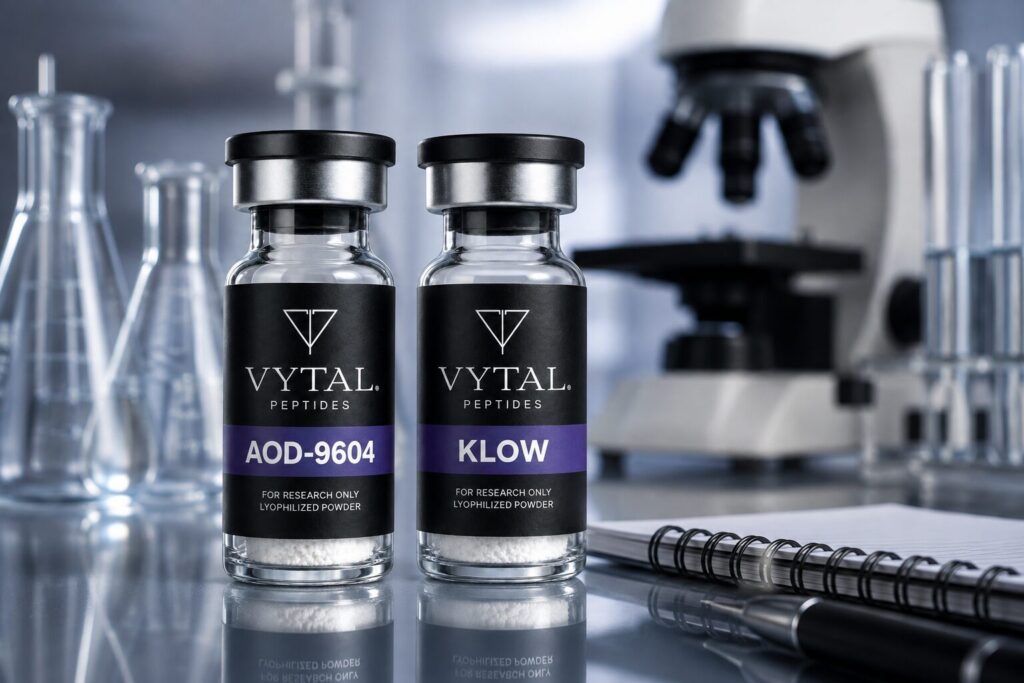
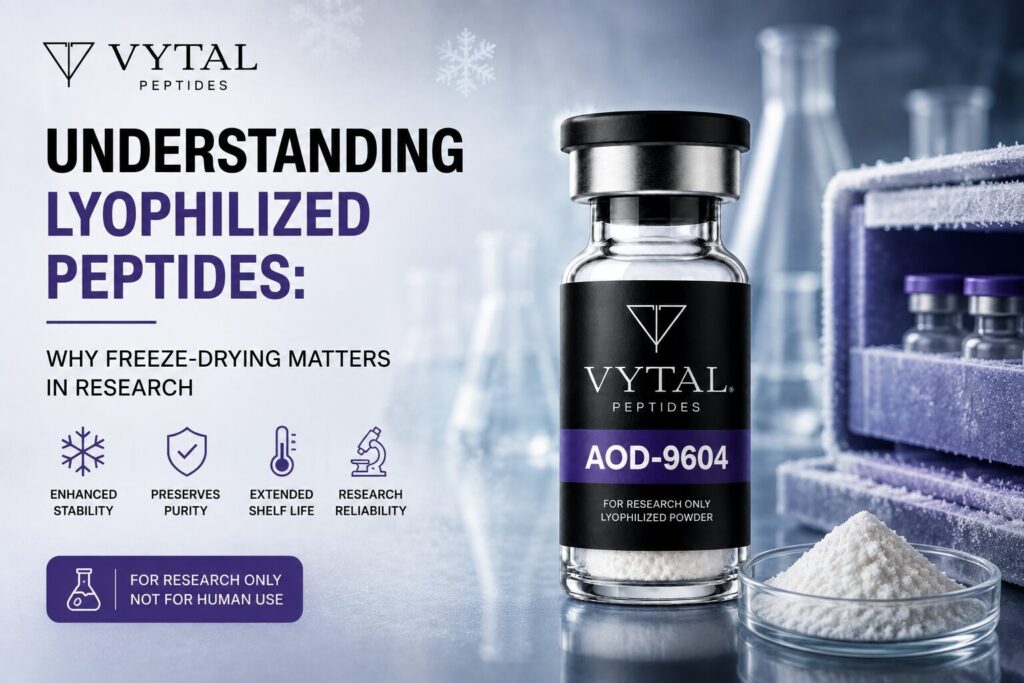
Many research peptides are supplied as a white lyophilized powder rather than a liquid solution. This manufacturing approach is designed to improve long-term stability during storage and transportation while helping preserve peptide structure.
Understanding why peptides are freeze-dried allows researchers to better appreciate the importance of proper laboratory handling and storage procedures.
What Is Lyophilization?
Lyophilization, commonly known as freeze-drying, is a process that removes moisture from a frozen material under vacuum.
Instead of melting into liquid water, ice transitions directly into vapor through sublimation.
This process minimizes structural stress that can occur during conventional drying techniques.
Why Freeze-Drying Is Used
Research laboratories value lyophilization because it may provide several advantages.
Potential benefits include:
- Improved long-term stability
- Reduced moisture exposure
- Easier transportation
- Extended storage life
- Better preservation of peptide structure
Proper Storage Practices
For optimal laboratory handling, researchers generally recommend:
Store Before Reconstitution
Keep lyophilized peptides frozen whenever possible according to laboratory storage protocols.
Minimize Moisture
Avoid exposing vials to excessive humidity after opening.
Reduce Temperature Fluctuations
Repeated warming and cooling cycles may reduce long-term stability.
Protect from Light
Store sensitive compounds away from prolonged direct light exposure.
Reconstitution Considerations
Researchers typically recommend:
- Allow the vial to reach room temperature before opening.
- Add sterile solution slowly along the inside wall of the vial.
- Gently swirl rather than shake vigorously.
- Avoid unnecessary agitation.
These practices help maintain consistent laboratory preparations.
Common Research Mistakes
Laboratories should avoid:
- Frequent freeze-thaw cycles
- Direct sunlight
- Excessive heat exposure
- Non-sterile handling techniques
- Improper storage temperatures
Frequently Asked Questions
Why are peptides shipped as powder?
Freeze-dried peptides generally remain more stable during transportation than liquid preparations.
Can lyophilized peptides be stored at room temperature?
Temporary shipping conditions may be acceptable for certain compounds, but long-term laboratory storage should follow recommended storage guidelines.
Why shouldn’t the vial be shaken?
Gentle mixing helps reduce unnecessary physical stress during reconstitution.
Conclusion
Lyophilization plays an important role in preserving peptide quality for laboratory research. Combined with proper storage and handling practices, freeze-dried peptides provide researchers with a stable format suitable for a wide variety of experimental applications.