FOR RESEARCH USE ONLY
The information in this article is intended for educational and scientific discussion only. Vytal Peptides supplies research materials exclusively for qualified laboratory research. Products are not intended for human or veterinary use.
Key Research Highlights
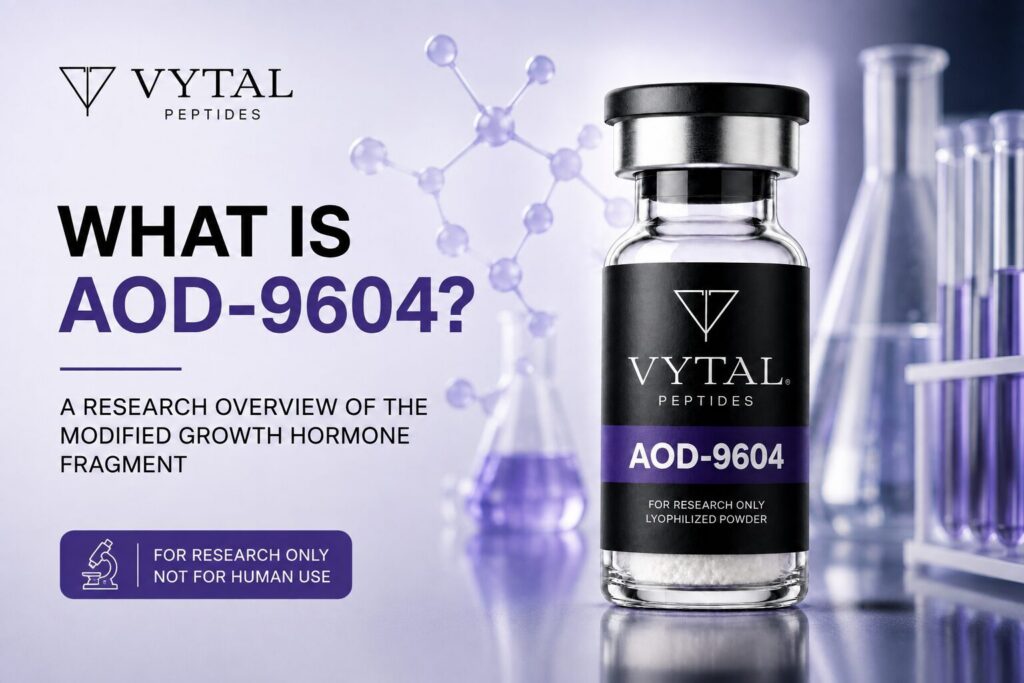
- AOD-9604 is a modified fragment of human growth hormone consisting of amino acids 176–191.
- It has been investigated in laboratory settings for its role in lipid metabolism and metabolic signaling.
- Most published findings come from cell-based studies and preclinical animal research.
- Additional research is required to better understand its biological activity and potential applications.
Introduction
AOD-9604 has become one of the more frequently discussed research peptides in metabolic science. Rather than representing a complete growth hormone molecule, it is a shortened peptide fragment designed for laboratory investigation into specific biological pathways.
Researchers continue to examine how this peptide interacts with cellular mechanisms related to fat metabolism while distinguishing its activity from the broader biological effects associated with full-length growth hormone.
Although interest has grown considerably within research communities, AOD-9604 remains a research compound and should only be used in qualified laboratory environments.
Molecular Background
AOD-9604 is derived from amino acids 176 through 191 of human growth hormone.
Scientists selected this region because experimental work suggested it may influence metabolic processes independently from many of growth hormone’s other physiological functions.
Current research focuses primarily on understanding how this fragment behaves at the molecular level and how cells respond under controlled laboratory conditions.
Areas of Scientific Investigation
Current laboratory research has explored several areas including:
- Lipid metabolism
- Cellular energy regulation
- Adipocyte biology
- Metabolic signaling pathways
- Gene expression related to fat metabolism
Most findings remain experimental and require additional validation.
Current Research Findings
Published laboratory studies have investigated whether AOD-9604 may influence:
- Cellular fat oxidation
- Lipid breakdown pathways
- Energy utilization
- Adipose tissue metabolism
- Cellular signaling mechanisms
Researchers continue studying these observations to determine reproducibility across different experimental models.
Limitations of Current Research
Despite increasing interest, several limitations remain.
Current evidence largely consists of:
- Cell culture studies
- Animal research
- Early experimental investigations
Large-scale human clinical evidence remains limited, meaning many biological questions remain unanswered.
Frequently Asked Questions
Is AOD-9604 approved as a medicine?
No. Research-grade AOD-9604 supplied by Vytal Peptides is intended solely for laboratory research.
Why is AOD-9604 studied?
Researchers investigate its potential interaction with metabolic pathways and lipid metabolism.
Can laboratory results predict human outcomes?
Not necessarily. Laboratory findings require extensive clinical validation before conclusions can be drawn.
Conclusion
AOD-9604 continues to attract scientific interest because of its unique molecular structure and potential role in metabolic research. While laboratory findings remain encouraging, further investigation is necessary before broader scientific conclusions can be established.